In-hye and Ji-woo’s mother–son relationship
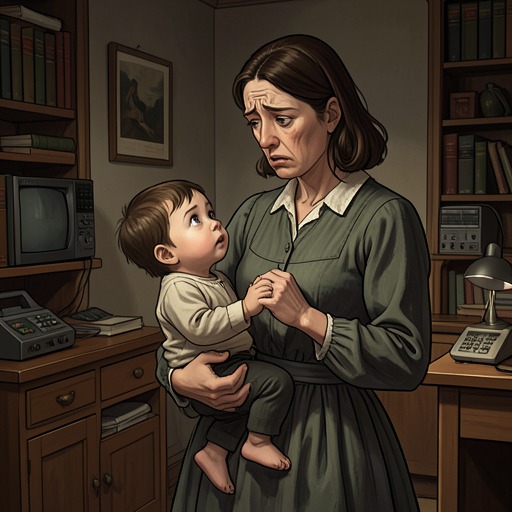
The VegetarianIn-hye and Ji-woo’s mother–son relationship is at once a practical bond of care and the slender thread connecting In-hye to ordinary life. After her husband leaves, she raises Ji-woo largely on her own, making him the person for whom she continues to work, endure, and return to the demands of daily living. His presence helps hold her in the world, but it cannot prevent her exhaustion or spare him from sensing that something is wrong.
Family Life and Separation
Even before his father leaves, Ji-woo’s question about whether there is a dad in their family exposes how little he actually sees him. The boy has asked the same question every morning, because his father is so infrequently present. In-hye answers him shortly that there is no one at all, only the two of them, and that they will have to be enough for each other. The exchange makes their household’s reality plain: the separation changes the family formally, but the father’s absence has already been part of Ji-woo’s everyday experience.
After her husband leaves, In-hye makes a general rule of spending evenings and weekends with Ji-woo. This is not simply a statement of affection; it is a schedule shaped around his need for dependable care. When an emergency at the hospital forces her to leave him with the woman next door, In-hye arranges the practical details by phone, noting that the bus will reach the main gate at five-fifty and that she will have to take Ji-woo with her if she is late. Her attention moves between the hospital and her son: even at a moment dominated by Yeong-hye’s medical crisis, she is calculating how to make sure Ji-woo is cared for and can sleep safely.
Care, Laughter, and In-hye’s Anchor
The relationship also gives In-hye brief, unplanned relief from pain. During her period of insomnia and psychological turmoil, the pain sometimes stops just after Ji-woo makes her laugh. He asks whether a particular antic was what made her laugh, then repeats and escalates it: pursing his lips, miming a horn with his hands, making clattering sounds, or sticking his head between his legs and calling to her in a silly voice. He devotes his ingenuity to coaxing another laugh from his mother. The moment offers a small, intimate reciprocity: Ji-woo is the child in her care, yet he also responds to her distress with the means available to him.
The relief is real but fragile. In-hye recognizes that Ji-woo does not know how guilty it makes her feel to see him work so hard for a little apparent happiness, or that her laughter will eventually run out. She can laugh and then feel the sadness return, aware that people go on eating, drinking, washing, and living even after terrible things have happened. Her son’s clowning does not cure her or dissolve what weighs on the family; it creates a momentary interruption in the pain and reminds her of the ordinary life she is trying to preserve.
That responsibility has particular force when In-hye wonders whether, without Ji-woo, she too might have let go of the slender thread tying her to everyday life. She has felt chaos during the months of sleeplessness, but her responsibility toward him has helped keep her from relinquishing her hold. The relationship thus works in both directions without becoming equal in burden: In-hye remains his mother and caretaker, while the fact of being needed by him helps sustain her.
Protection and the Future
In-hye’s care is shadowed by the question of what Ji-woo will eventually learn. She anticipates that he will soon be able to read and encounter other people independently, and that sooner or later he will hear what happened. She worries about how to explain it and how to keep him happy. The concern is not abstract: she describes him as sensitive and prone to minor illnesses, yet also as a happy child, and she wants to protect that happiness without knowing how the family’s history can be kept from him.
Her effort to shelter him cannot be separated from the care she gives Yeong-hye. In-hye continues to act as her sister’s carer even after the family withdraws, while also meeting Ji-woo’s needs and maintaining her shop. The pressures converge in the hospital, where Yeong-hye’s refusal of food becomes life-threatening and the doctor warns that she may need transfer to a main hospital in Seoul to receive treatment for gastric bleeding. In-hye must arrange the next step for her sister while remembering that Ji-woo is waiting at home and that she cannot leave him indefinitely. The episode makes visible the practical limits of her care: love and duty do not give her unlimited time, strength, or control over outcomes.
Meaning and Limits of the Bond
The relationship’s importance lies partly in its ordinary repetitions. Ji-woo asks, performs, sleeps beside his mother, and depends on her; In-hye answers, arranges his care, and tries to keep their life going. Against the novel’s escalating scenes of illness and institutional intervention, these familiar acts mark the daily world to which she remains attached. Her responsibility for her son offers a reason to persist, not a guarantee that she can master the crises around them.
In-hye’s bond with Ji-woo therefore combines shelter with exposure. She tries to preserve his security and future happiness, but he is close enough to witness her pain and to make repeated efforts to draw her out of it. He cannot know the full weight she carries, and she cannot promise that he will never learn it. Their small household is described as having to be enough for the two of them; the words convey both their mutual dependence and the loneliness left by his father’s absence. The relationship sustains In-hye’s connection to everyday life while showing how precariously that life is held together.